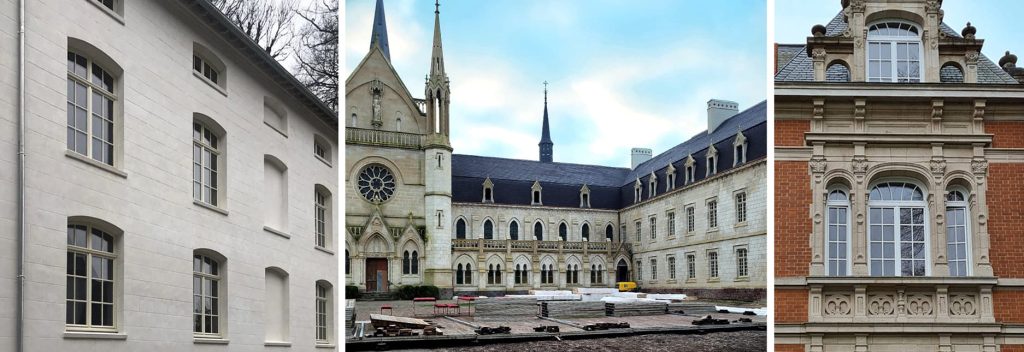
Which finish to choose for wooden windows: Softline or Retro?

Details make all the difference. The choice of window model and finish has a huge impact on its appearance and how it blends into its surroundings.
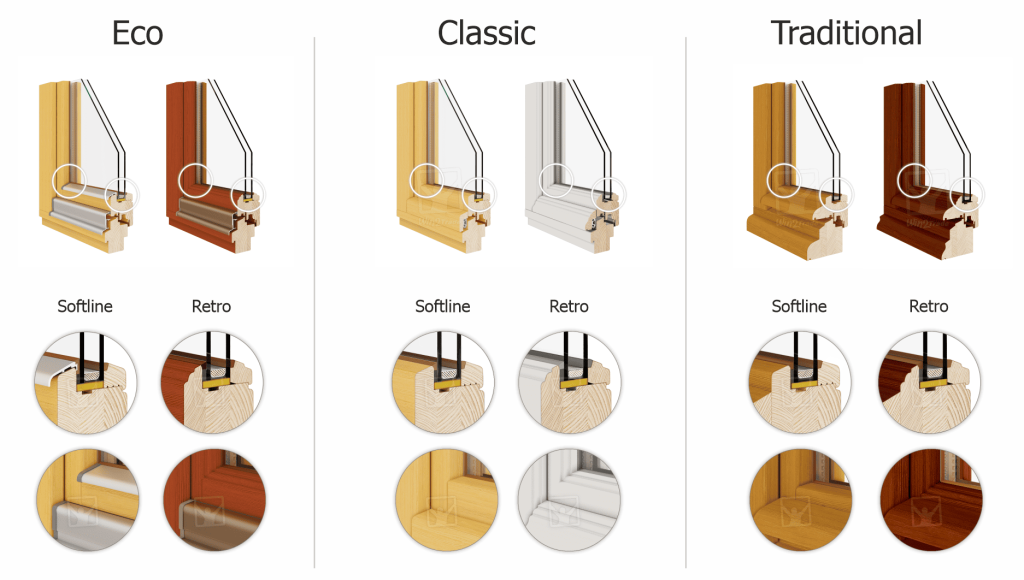
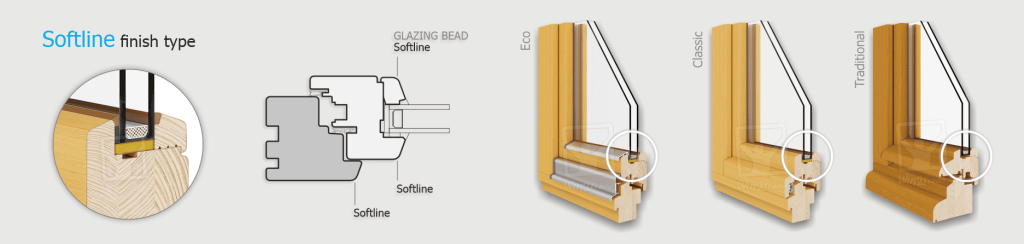
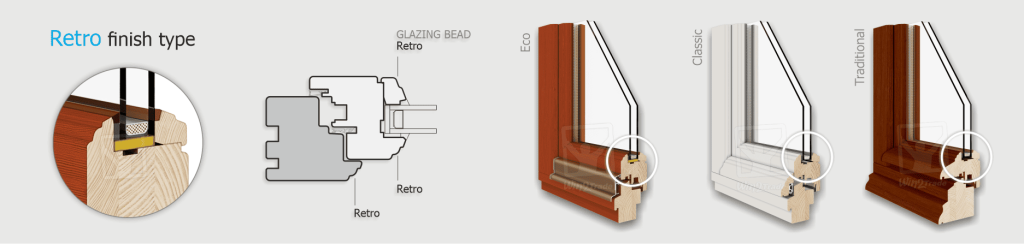
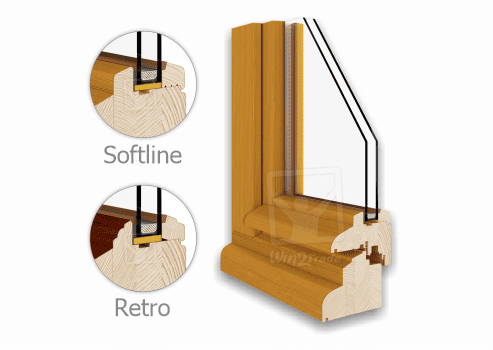
Regardless of chosen window model – Eco, Classic or Traditional – two standard finishes are available: Softline and Retro.
When choosing, it’s essential to consider the aesthetic consistency between the window, the building’s facade and the interior style.

Softline finish
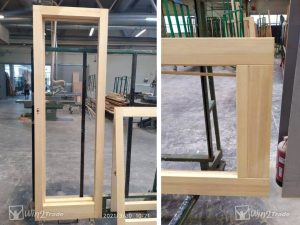
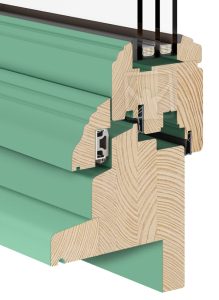
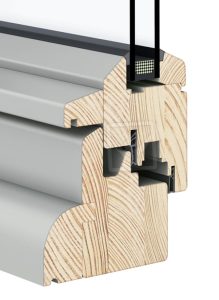
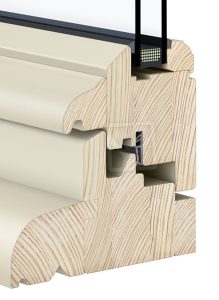
In the Softline finish, all window edges – both frame and sash – are gently rounded. Light reflects off them subtly, without creating sharp lines, giving the entire look a soft and elegant feel.
This classic and timeless finish suits both modern and older buildings and traditionally styled properties.

Retro finish
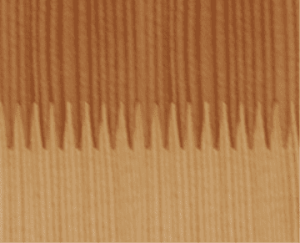
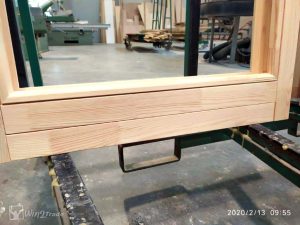
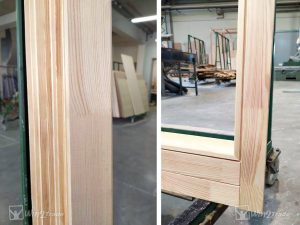
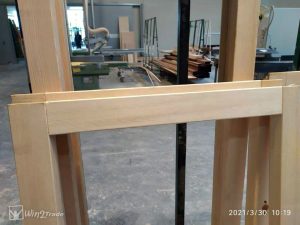
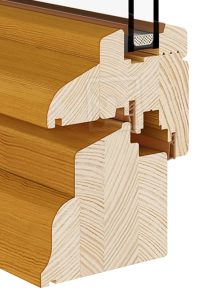
The Retro finish is distinguished by decorative milling on the edges of the frame and sash. This type of finish perfectly highlights the building’s historical character.
The milling lines create a play of light and striking contrasts, lending the form a lightness and elegance despite the solid appearance of the wooden profile.


Solid pine or finger-jointed pine – which wood should you choose for wooden windows?

Le choix du bois est une étape cruciale dans tout projet de menuiserie fenêtres. Parmi les essences les plus populaires, le pin se distingue par sa résistance, sa facilité de travail et sa disponibilité. Mais faut-il opter pour du pin massif ou du pin abouté ? Voici les différences.

Finger-jointed pine – efficiency and stability in wooden windows


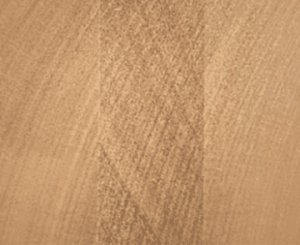
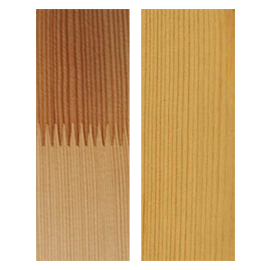
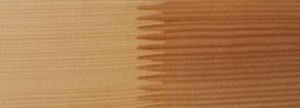
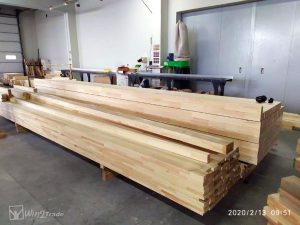
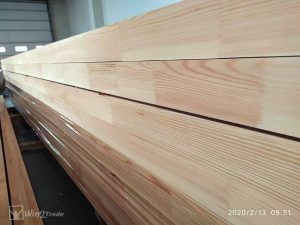
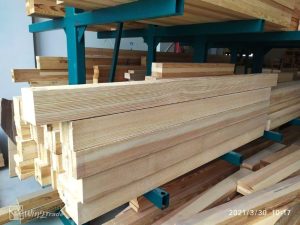
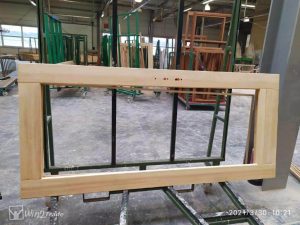
Finger-jointed pine consists of flawless pieces of wood joined together with joints that are imperceptible
to the touch but visually visible. This makes it suitable for:

  • Painted, opaque finishes
  • Projects where the natural appearance of the wood is not a priority
  • Window joinery requiring both: high durability and cost-effectiveness

Solid pine – for premium joinery


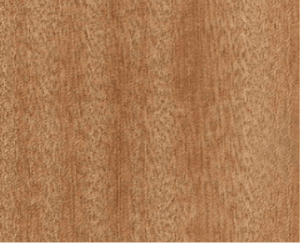
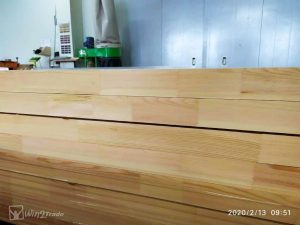
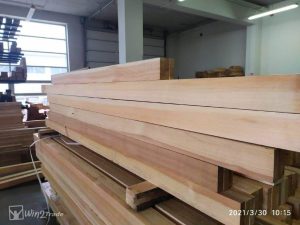
Laminated solid pine consists of long lamelas of wood without visible joints, making it an ideal choice for:

  • Transparent finishes: stains, varnishes
  • Projects that showcase the natural beauty of wood
  • Elegant wooden windows, ideal for characterful homes or carefully renovated buildings.

Which wood should you choose for joinery?

Finger-jointed pine

  • Finish: opaque paint
  • Aesthetics: visible joints
  • Dimensional stability: very good
  • Recommended use: painted windows
  • Cost: more economical

Solid pine

  • Finish: stain, varnish, natural
  • Aesthetics: uniform appearance
  • Dimensional stability: excellent
  • Recommended use: windows with a natural finish
  • Cost: higher

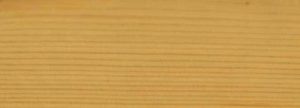
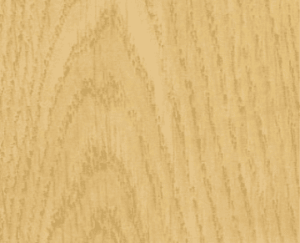
Finger-jointed pine (Micro)

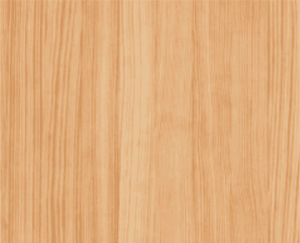
Solid pine

What type of wood should you choose for wooden windows?

When choosing the right material for wooden windows or doors, it’s crucial to understand the properties of each species. Our window joinery is made of high-quality laminated wood. We offer several species of wood suitable for producing durable and aesthetically pleasing windows.
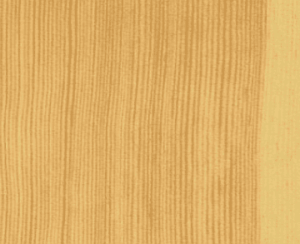
solid pine finger-jointed pine meranti


oak larch eucalyptus

Solid and finger-jointed pine
Pine is one of the most commonly used wood species in window joinery.

  • Density after felling: 750–820–850 kg/m³,
  • Density at 12–15% moisture content: 330–510–890 kg/m³,
  • Production density: 420 kg/m³ or more,
  • Origin: Central, Northtern and Eastern Europe,
  • Appearance: it provides a perfectly smooth surface after painting (RAL).

Finger-jointed pine is often used in window production due to its stability and favorable price.

Meranti
Meranti is an exotic wood from Southeast Asia (Malaysia, Indonesia), popular in the production od wooden windows.

  • Density at 12% moisture: 390–560–760 kg/m³,
  • Production density: 450 kg/m³ or more,
  • Appearance: the natural wood grain is visible after painting. Its natural durability and elegance make it an ideal choice for stylish wooden terrace doors.

Oak
Oak is a noble wood species, ideal for windows in classic or modern styles.

  • Density at 12–15% moisture: up to 960 kg/m³,
  • Production density: 650 kg/m³ or more,
  • Origin: France, Spain, Scandinavia, Eastern Europe,
  • Appearance: visible wood texture under paint (RAL).

Oak is highly valued in window joinery for its strength and exceptional durability.

Larch
Larch is ideal for window production because it is highly resistant to moisture and does not warp under its influence.

  • Density at 12–15% moisture: up to 700 kg/m³,
  • Production density: 600 kg/m³ or more,
  • Origin: Europe, Central Asia,
  • Appearance: it provides a perfectly smooth surface after painting (RAL).

Eucalyptus
Eucalyptus wood is exceptionally durable and resistant to mechanical damage. It is characterized by high hardness and natural resistance to moisture and pests.

  • Density at 12–15% moisture: up to 650 kg/m³,
  • Production density: 570 kg/m³ or more,
  • Origin: South America, Spain and Portugal,
  • Appearance: visible wood grain under paint (RAL)

Accoya
Accoya® is a revolutionary wood for window production:

  • Acetylation treatment guarantees 50 years of durability,
  • Ecological wood, exceptionally stable and resistant,
  • Ideal for modern, efficient wooden windows.

Thanks to its unique process, Accoya® surpasses other wood species in terms of durability and performance.

Other available wood species 
We also offer spruce and other rare wood species for window joinery. Some species are available for special order or with minimal production quantities.
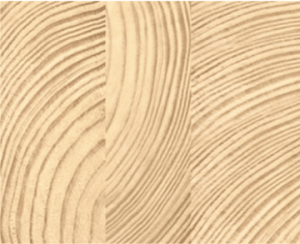
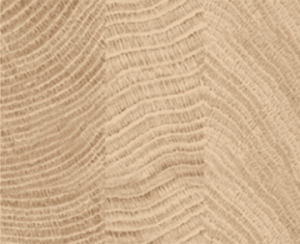
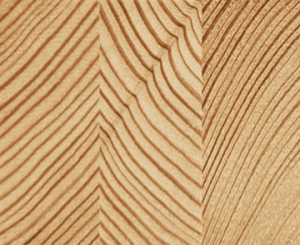
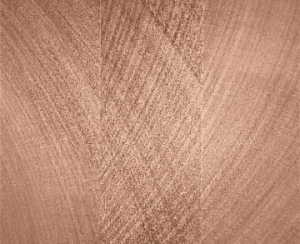
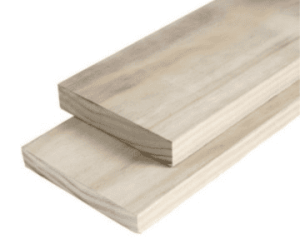
pine – laminated timber (cross-section) meranti – laminated timber (cross-section) oak – laminated timber (cross-section)


larch – laminated timber (cross-section) eucalyptus – laminated timber (cross-section) Accoya

Looking for high-quality, custom-made windows? Contact us to learn more about our full range of wooden windows and doors, crafted with passion and craftsmanship precision.

FSC-certified wooden windows – durability and responsibility.

At Win2Trade, we produce wooden windows and doors from precious wood species such as meranti, pine and oak. Depending on your needs, the wood can be FSC- or PEFC-certified. This way, we combine the aesthetics of our windows with an ecological and responsible approach.

What is FSC wood?
FSC wood is recognized worldwide as a material derived from sustainable forestry. It comes from forests certified according to rigorous standards, making it deal for custom-made windows and doors. With this certification:

  • You are guaranteed an ethical product
  • You support the protection of biodiversity
  • You contribute to the fight against deforestation

Using FSC-certified wood in your windows is a choice for a greener future for the planet and the highest quality wooden windows.

FSC vs PEFC – what’s the difference?

  • FSC : rigorous certification, international recognition, high market visibility.
  • PEFC : national or regional approach, criteria adapted to local conditions, more flexible certification.

We always offer custom-made wooden windows and doors made from certified wood according to your preferences. Simply indicate your choice during the quote request.

Why choose certified wooden windows?

  • Natural aesthetics and the warmth of wood
  • Environmental and forest protection
  • Responsible and traceable production
  • Ideal for wooden doors or custom-made windows for any interior

Good to know
Planning a construction or renovation? Remember to specify whether you want FSC- or PEFC-certified wooden products. At Win2Trade, we tailor production to your requirements – combining comfort, durability and ethics.

The elegance of French wooden windows – proportions, light and heritage.

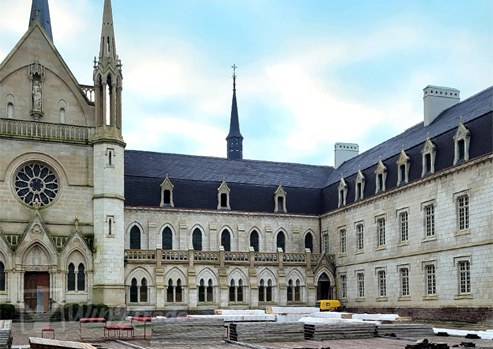
The architectural richness of France is also reflected in its window joinery. Each region has its own characteristics, shaped by history, climate and local culture. In this article, we explore what makes French wooden windows so unique.

Tall, slim and light windows
French homes often have significant ceiling heights. This leads to the creation of slim windows, designed to maximize natural light.
French wooden windows are characterized by:

  • Slim profiles, providing a light aesthetic
  • Tall sashes, often divided by elegant glazing bars
  • Vertical forms that combine elegance and functionality

Unique architectural details
Typical features of French window joinery include:

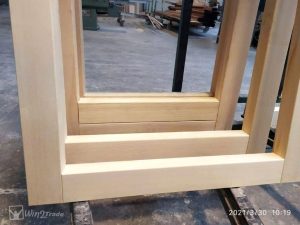
  • A widened threshold at the bottom of the frame
  • An integrated drip cap, often extended to an external sill
  • An additional drip cap on the sash, enhancing tightness and elegance

These detaild give the wooden window a traditional and refined character, perfectly suited to both historic buildings and stylish renovation projects.

Classic-Renovo Traditional HTR GDL

Why choose French wooden windows?

  • Elegant design
  • Optimized natural light
  • Carefully crafted architectural details
  • Perfectly matched to local and historic styles
  • Aesthetic value for your window joinery

French wooden windows – GDL (Wolf’s Jaw) locking systems with Cremona

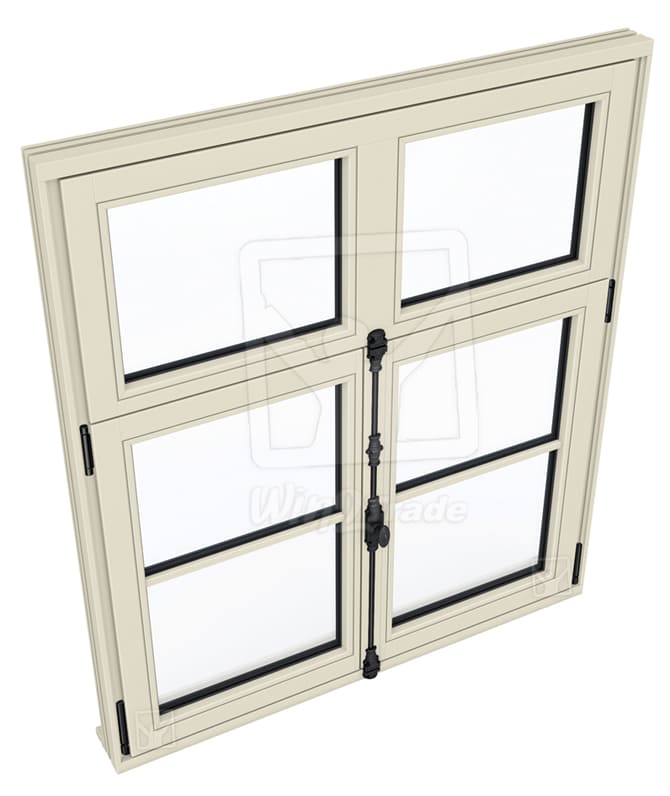
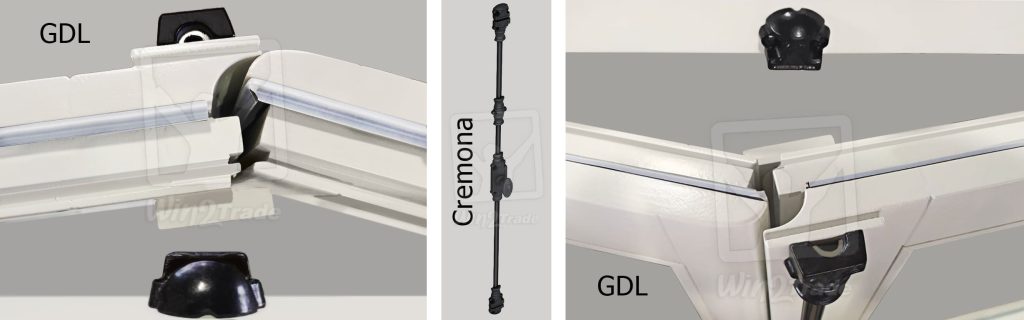
French wooden windows are distinguished not only by their style but also by their double-sash opening system without a fixed post. This result, typical of French window joinery, is achieved thanks to mechanism such as the GDL (Wolf’s Jaw) closing.

GDL (Wolf’s Jaw) – simultaneous opening of both sashes
The GDL (Wolf’s Jaw) system we offer is based on a movable central post. When the window is opened, both sashes open simultaneously thanks to an ingenious mechanism inspired by the „wolf’s jaw – sheep’s head” principle. This allows for complete freedom of space, providing panoramic views and unobstructed access.
This type of opening is particularly appreciated in wooden window designs installed in kitchens or living rooms, where natural light and convenient access are a priority.

Interior aesthetics – the importance of a movable post
French wooden windows are often left uncurtained, especially in modern or classic interiors. As a result, their appearance becomes a decorative element on its own.
The version with a central handle integrated into the movable post is particularly recommended because it guarantees:

  • Perfect visual symmetry
  • Convenient opening and closing
  • High-quality joinery solution

Locking system with Cremona – the authentic charm of old houses
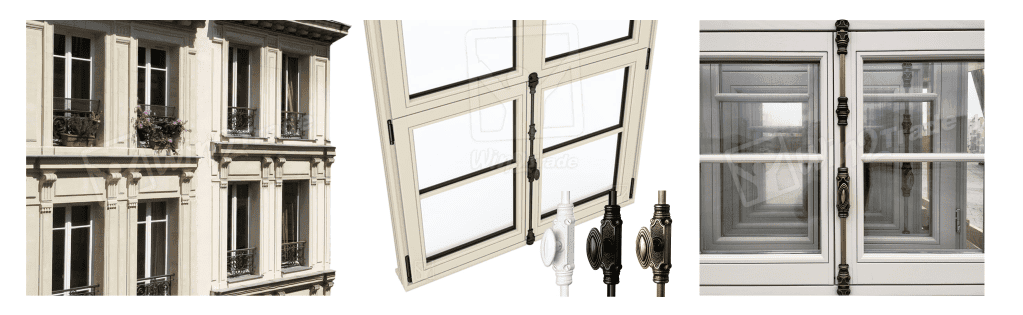
Cremona is a traditional locking system („handle”) – often decorative – used to close French windows.
It’s ideal for historic renovation projects where it is desired to recreate a vintage, authentic style.

  • Elegant wrought iron or brass handle
  • Vertical tie rod lock
  • Compatible with most wooden double-sash windows